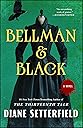
Bellman & Black: A Novel
Product ID: 120205020
Desertcart purchases this item on your behalf and handles shipping, customs, and support to India.
#1 New York Times bestselling author “An astonishing work of genius.” — Bookreporter “Magically transformative.” — Bookpage Can one moment in time haunt you forever? From the instant #1 New York Times bestselling author of The Thirteenth Tale comes a “poetic and mysterious” ( Booklist ) gothic historical novel that will haunt you to your very core. Caught up in a moment of boyhood competition, William Bellman recklessly aims his slingshot at a rook resting on a branch, killing the bird instantly. It is a small but cruel act, and is soon forgotten. By the time he is grown, with a wife and children of his own, William seems to have put the whole incident behind him. It was as if he never killed the thing at all. But rooks don’t forget… Years later, when a stranger mysteriously enters William’s life, his fortunes begin to turn—and the terrible and unforeseen consequences of his past indiscretion take root. In a desperate bid to save the only precious thing he has left, he enters into a rather strange bargain, with an even stranger partner. Together, they found a decidedly macabre business. And Bellman & Black is born. Review: On Being Fair, Brilliant First Novels and the Love of Crows - As with many books, I read all of the negative reviews here and elsewhere before reading this book. Many of my friends had already written very negative reviews of "Bellman & Black", so I was prepared from the outset to be disappointed. To be fair, "Bellman & Black" is in no way comparable to Diane Setterfield's first novel, "The Thirteenth Tale." That book was sell-your-soul-at-the-crossroads awesome. I, like all my friends who hated this book, loved it. It was one of the most brilliant debut novels I have ever read. So - stop all your expectations right there. Why are we even trying to compare two completely different books simply because they are written by the same author? For some, maybe to truly appreciate "Bellman & Black" is to just read it as if it were written by an entirely different person than the one who wrote "The Thirteenth Tale." Because I would contend, in a sense, it probably was. As others have noted, there was a LONG gap between publication of the first novel and this one. Who knows what experiences Diane Setterfield lived through and brought to bear in this sophomore novel? One friend stated "a ghost story without a ghost is not a ghost story." In that very statement alone lies the brilliance of this second novel. This is indeed a ghost story. In the grand tradition of Dickens, Poe, Henry James and William Wilkie Collins. Others stated this book was literary pretentiousness. I would argue it was an ode to those who have written before. We have become so used to the obvious horror-movie-effects of the modern entertainment industry that we forget that not all ghosts rattle big chains and drip gore. William Bellman was a man so beset by hauntings he couldn't begin to face one of them, let alone all of them. Several people flippantly refer to the first half of the book as being the part where all of William Bellman's family, friends, and acquaintances die. The advent of vaccines and modern medicine have given us a false sense of our own security and removed us from a time when entire families could be wiped out, literally overnight, from common and preventable diseases. Be grateful: I doubt few of us could survive the emotional losses William Bellman sustained. We are not most of us made of such stern stuff, I promise you. Parts of this book other reviewers found boring and plodding I found to be well-researched, written and fascinating: (a) the millworkings and dying industry: we take for granted the abundance of color available to us in our everyday clothing as well as the laws that now protect us and our environment from practices common in Victorian times (b) funerary practices and the economics of death during the Victorian era (c) the building, establishment and financial workings of a large retail establishment during this period And lastly, the literary relevance and legends of crows, ravens and rooks. If you find my review to be annoying and at odds with your own, I'm sorry. No - this book is not as approachable, readable or even as likeable as "The Thirteenth Tale", but to be fair - why must it be? Why would Diane Setterfield want to write "The Thirteenth Tale - Part 2"? Why should we expect her to? I LIKED Bellman & Black. It isn't my new favorite novel of all time, no. I do however think it was well-written and just as finely crafted a sophomoric effort as her first. All children are different. Celebrate that. Don't compare this one to the first one. Be fair. Review: "They're not what you think they are." - William Bellman spends his entire life haunted by one bad decision he made in childhood. That life is the subject of Diane Setterfield's second novel, seven years after her glorious début, The Thirteenth Tale . First at his family's fabric mill in rural England, and later in a very peculiar business of his own in London, William is constantly followed and watched by...something. His business fortunes, his wife and children, his fleeting happiness--everything he acquires in life manages to vanish, leaving him older and increasingly bitter and hermitic. Will he ever finally confront the demon that has always threatened him? That's the big question at the heart of BELLMAN & BLACK. B&B is subtitled "a ghost story," but it isn't your usual kind of ghost story. The title of my review is a quote from the book on the subject of rooks, the strange, beautiful black birds that resemble crows. If you read B&B, you'll learn a great deal about these elusive creatures, and you'll see what they have to do with the fate of William Bellman. It's definitely unusual. I bought this book from desertcart.uk last month and had it shipped to me here in NYC because I couldn't wait for the American release--that should tell you how much I loved THE THIRTEENTH TALE. The first book reminded me of Charles Dickens and Daphne du Maurier, my all-time favorite authors. This new book reminds me of the same giants, but not in the same way. B&B is a shorter, simpler story than TTT, and it made me think of A CHRISTMAS CAROL. If you consider William Bellman as a stand-in for Ebenezer Scrooge, you begin to see just what Setterfield is up to. I can't say I loved this the way I loved the first one, but it's an interesting, surprisingly fast read, and Setterfield's vivid, graceful prose is always welcome in my house. Try it.
| Best Sellers Rank | #498,376 in Kindle Store ( See Top 100 in Kindle Store ) #1,019 in Ghost Fiction #1,943 in British & Irish Literary Fiction #2,412 in Gothic Fiction |
B**S
On Being Fair, Brilliant First Novels and the Love of Crows
As with many books, I read all of the negative reviews here and elsewhere before reading this book. Many of my friends had already written very negative reviews of "Bellman & Black", so I was prepared from the outset to be disappointed. To be fair, "Bellman & Black" is in no way comparable to Diane Setterfield's first novel, "The Thirteenth Tale." That book was sell-your-soul-at-the-crossroads awesome. I, like all my friends who hated this book, loved it. It was one of the most brilliant debut novels I have ever read. So - stop all your expectations right there. Why are we even trying to compare two completely different books simply because they are written by the same author? For some, maybe to truly appreciate "Bellman & Black" is to just read it as if it were written by an entirely different person than the one who wrote "The Thirteenth Tale." Because I would contend, in a sense, it probably was. As others have noted, there was a LONG gap between publication of the first novel and this one. Who knows what experiences Diane Setterfield lived through and brought to bear in this sophomore novel? One friend stated "a ghost story without a ghost is not a ghost story." In that very statement alone lies the brilliance of this second novel. This is indeed a ghost story. In the grand tradition of Dickens, Poe, Henry James and William Wilkie Collins. Others stated this book was literary pretentiousness. I would argue it was an ode to those who have written before. We have become so used to the obvious horror-movie-effects of the modern entertainment industry that we forget that not all ghosts rattle big chains and drip gore. William Bellman was a man so beset by hauntings he couldn't begin to face one of them, let alone all of them. Several people flippantly refer to the first half of the book as being the part where all of William Bellman's family, friends, and acquaintances die. The advent of vaccines and modern medicine have given us a false sense of our own security and removed us from a time when entire families could be wiped out, literally overnight, from common and preventable diseases. Be grateful: I doubt few of us could survive the emotional losses William Bellman sustained. We are not most of us made of such stern stuff, I promise you. Parts of this book other reviewers found boring and plodding I found to be well-researched, written and fascinating: (a) the millworkings and dying industry: we take for granted the abundance of color available to us in our everyday clothing as well as the laws that now protect us and our environment from practices common in Victorian times (b) funerary practices and the economics of death during the Victorian era (c) the building, establishment and financial workings of a large retail establishment during this period And lastly, the literary relevance and legends of crows, ravens and rooks. If you find my review to be annoying and at odds with your own, I'm sorry. No - this book is not as approachable, readable or even as likeable as "The Thirteenth Tale", but to be fair - why must it be? Why would Diane Setterfield want to write "The Thirteenth Tale - Part 2"? Why should we expect her to? I LIKED Bellman & Black. It isn't my new favorite novel of all time, no. I do however think it was well-written and just as finely crafted a sophomoric effort as her first. All children are different. Celebrate that. Don't compare this one to the first one. Be fair.
T**.
"They're not what you think they are."
William Bellman spends his entire life haunted by one bad decision he made in childhood. That life is the subject of Diane Setterfield's second novel, seven years after her glorious début, The Thirteenth Tale . First at his family's fabric mill in rural England, and later in a very peculiar business of his own in London, William is constantly followed and watched by...something. His business fortunes, his wife and children, his fleeting happiness--everything he acquires in life manages to vanish, leaving him older and increasingly bitter and hermitic. Will he ever finally confront the demon that has always threatened him? That's the big question at the heart of BELLMAN & BLACK. B&B is subtitled "a ghost story," but it isn't your usual kind of ghost story. The title of my review is a quote from the book on the subject of rooks, the strange, beautiful black birds that resemble crows. If you read B&B, you'll learn a great deal about these elusive creatures, and you'll see what they have to do with the fate of William Bellman. It's definitely unusual. I bought this book from Amazon.uk last month and had it shipped to me here in NYC because I couldn't wait for the American release--that should tell you how much I loved THE THIRTEENTH TALE. The first book reminded me of Charles Dickens and Daphne du Maurier, my all-time favorite authors. This new book reminds me of the same giants, but not in the same way. B&B is a shorter, simpler story than TTT, and it made me think of A CHRISTMAS CAROL. If you consider William Bellman as a stand-in for Ebenezer Scrooge, you begin to see just what Setterfield is up to. I can't say I loved this the way I loved the first one, but it's an interesting, surprisingly fast read, and Setterfield's vivid, graceful prose is always welcome in my house. Try it.
S**R
Rent before you buy
There is a lesson here for writers everywhere and for first time authors in particular: If your first book is a success do not assume that your next one will be. In fact, work twice as hard on the second because your reputation is on the line. You have a lot to live up to when you hit a homerun on first time at bat. So, writer/author be warned. Someone might have warned Ms. Setterfield, because I loved, adored!, her first book The Thirteenth Tale. And it was because of that beautifully written, tightly and cleverly told story that I waited patiently for this, her next offering. Sadly, Bellman & Black is not as good. Let me speak generally first. This was billed as a thrilling ghost story. Someone even said "creepy." Therefore, it was not without eager excitement that I began to read this long-awaited volume. Bah. There is a great premise here of a young man who does a shameful deed and spends his life trying to forget while doing good work. Then comes what could have been an equally clever tie-in with rooks (lord knows Edgar Allen Poe did it well with The Raven!), and I can't tell you why but the rook idea was seriously a great idea - but then the tale disintegrated into boring and long-winded expositions about our main character's, William Bellman, exhausting life. The plot dies along the way. In fact, many moments I asked myself where was the ghost story? Where was the creep factor? When would it be "thrilling." As time went on William was nearly able to forget what he had done. Nearly. And that is the point of the story which goes a very long way around the block until we see how the point is made. Ms. Setterfield is a very fine writer. She has a way to turn a phrase that I do admire. But this book is just dull. It lacks "the thing" that makes the reader stay up at night with an anxious hand that turns the pages. I am disappnted. I won't recommend this book unless you are a true Setterfield fan and simply have to try it. If so, get it from the library and then wait to see if you want to buy it. Wish I'd done that. I will with her next offering. ***Warning! Spoilers to Follow**** The ghost of the story is Black, which as I interpeted the tale, is the ghost of the rook that William kills in the beginning of the book. But I actually felt that Black (who said that he was there with William all along) was William's mind, his conscious or subconscious, and not an actual physical representation. There are a few moments from the book to support this -- where people who Wm. thinks see Mr. Black never actually do, where people think that Wm is actually Mr. Black but this is poo-pooed. And the story of Bellman's own daughter, her sickness and her failed recovery, seemed completely underdeveloped and extraneous at the end. Somehow I felt I was supposed to tie her into the rooks, but that failed for me. Overall, I think the abundance of subtle was too much and generally I love a subtle, soft-handed approach. Though deftly written it was way too dry for me. I say rent or check this out before you buy it. It isn't a thriller and the ghost story is weak.
H**R
Listen to the rook
Diane Setterfield is a delight: a brilliant, astute author who is a gift to lovers of elegant fiction that teaches as well as entertains. I read through many of the reviews and I have a few comments of my own. I, like most readers here, read her first book and loved it. I awaited a second eagerly and when I found out it was ready, I was doubly delighted when I found the subject matter included rooks, or crows/ravens as most Americans know them. (Ravens are bigger). I feed four crows on a regular basis and have spent many happy moments watching their antics. I've named each of them according to their individual personalities. Those of us who love crows also know that they are the smartest birds...... Some have complained that B&B isn't as good as THE THIRTEENTH TALE, I think it's different, but equally as good. When a writer produces a best selling novel we often expect the second to be a slightly altered version of the first. This book has been compared to Dickens because of the character Scrooge, and while that may be true, the writing style is more spare, even though it's rich in detail, it doesn't have the lengthy descriptive passages Dickens is known for...I used to teach English, and each year I would ask my students if they preferred spare prose styles or those laden with description. ( Not surprisingly, the spare usually won out, the reason given being "it makes the book shorter." It saddened me that so many students hadn't yet discovered the joy of reading, and each year I made it my mission to develop students into voluntary readers.) One astute girl, who also read a lot, liked spare prose. She gave the reason as being, "It allows me to fill in the details with my imagination." One of the things I loved about B&B was the way Bellman's enterprise, the production of fabric, created a similar environment in my own imagination as I read it, the story structure forming a "loom" that allowed the story to weave back and forth in my mind, much the way a loom weaves cloth. The novel doesn't lack description that is engaging, however, from the details of cloth making to the particulars of daily life, mores, and social structure of the time period. There also seems to be confusion as to who Mr. Black really is. Suppositions ranging from death, the ghost of the crow killed by Will as a boy, guilt, greed, or the passage of time. I think it's all of them, represented by Mr. Black. The book is part allegory, part historical fiction, and part morality tale, with a light dose of fantasy. It's a veritable feast of topics and themes to talk about, perfect for contemplative hermits like myself or lively book clubs. Both Mr. Black's occasional appearances and the timely interjections of the "rook commentator" are opportunities for conjecture. As I see it, there are three very large themes, none new, but how in this day and age do you develop new themes, you can only find new ways to explore them. First, guilt, as an entity, is actually a healthy quality for humans to possess, if we felt no guilt, we'd all be amoral beings incapable of recognizing good versus bad, much less acting decently. We can surmise that Will's life was influenced by his early guilt over killing an innocent bird, the rook. The message here is to make the reader analyze how to deal with guilt, suppress it and ruin one's life from its subconscious influence, or lance it and clean up the mess, make atonement in whatever way suits the infraction, if possible. Guilt segues into greed, driven by desperation, because Will put the acquisition of great wealth ahead of spending time with his family, even before tragedy struck. His daughter even went so far as to write, "Kiss Dora," in his diary, hoping he'd see it and spend more time with her. Eventually he believed that the acquisition of more wealth would ensure her survival, when all the while she hungered more for his presence. His daily endeavors became making more and more money, both to protect Dora and pay Mr. Black his share of the business.... Both of these themes feed into the major one, which I believe, is the recognition of time as being finite in all of our lives, some more so than others. This is perhaps one of the most dominant themes in the history of civilization. Some readers mention Scrooge, from "A Christmas Carol" by Dickens. I would also mention a stanza from "The Rubaiyat of Omar Khayyam," an 11th century Persian poet, astronomer and mathematican: "The Moving Finger Writes; and, having writ, moves on. Nor all thy piety nor wit shall lure it back to cancel half a line, nor all thy tears wash out a word of it." It's as apt today as it was a thousand years ago. Ms. Setterfield, writing as the rook, says it with graceful but forceful impact: "All stories must come to an end. This one. Everyone's. Yours."
J**R
A Huge Disappointment
I had waited with some anticipation for Diane Setterfield's new novel, BELLMAN & BLACK. Unfortunately, I was greatly disappointed. The novel, set in Victorian England, is the story of William Bellman who we first meet as a young boy when he carelessly kills a common blackbird - a rook. This event is pivotal and foreshadows the rest of the novel including the final, fairly predictable, ending. The book follows Bellman through life. A likeable and ambitious young man, he is employed by his uncle at the family mill. At this juncture, I hit my first wall. Description ad infinitum of the workings of the mill bogs the reader down in boring detail. The story picks up a little when Bellman marries and has children, but it doesn't last. His character is so one dimensional that even the multiple tragedies he endures could not move me. This lack of emotional response to him derives, I believe, from the fact that Ms. Setterfield tells the story mostly in narrative style and this really does not allow one to identify with or know what motivates Bellman. As a result, he comes off as flat and, unfortunately, dull. The novel became so tedious, that I put it down for a week or so and finally had to force myself to finish it. Therefore, in conclusion, while I loved Ms. Setterfield's previous novel, THE THIRTEENTH TALE, I feel she falls far short of the mark with BELLMAN & BLACK and I cannot recommend it.
R**H
A psychological profile of a man who thinks he can barter with grief
William Bellman starts out as a character that you feel slightly repelled to read about. He's ambitious, careless to those around him, and driven. The killing of a rook, puts himself and his gang of fellows under what seems to be a curse thought Will conveniently has forgotten the circumstances. However, the life he has built for himself shatters under tragedy. Thinking he has made a deal to capitalize on death, he exploits the Victorian obsession with death for profit. But is he really fulfilling the contract he has with the mysterious Black? In the beginning, we learn William is a young man prone to take a tumble with a lassie in the grassie (there is several consensual, quick sex scenes probably very accurate to the times so just be aware if that upsets you). His uncle takes him under his wing and Will becomes a success at the mill (not not for processing grain but for wool). He seems to have it all - this Wunderkind. His business ideas flourish. He falls in love, marries and has children. But everywhere his life is dogged by a mysterious figure who appears at the funerals of those he loves. In the second section, after the loss of almost every family member, Bellman becomes obsessed with building a new store in London. One that will cater to those who need goods for mourning. It is the profile of a man who thinks numbers, list, and staying busy will stop his mind unraveling. This is the section that I thought lost steam. Here Bellman is often on his own, with few characters around him to interact with, so he starts to flatten as a character. His obsessive drive for work is all we learn about him chapter after chapter. I think the second part needed more of the rich layer of his life that we got from section one. Especially, Dora should have been developed further. Her father, after making what he thinks is a contract to save her, ignores her. With his wealth he wouldn't have showered her with a private tutor? Something? The ending was like falling off the cliff. And thinking back to The Thirteenth Tale, that ending was also a little abrupt. Overall, a good story and highly recommend to those who love Victorian era stories with an element of darkness and obsession.
A**P
Great writing, disappointing plot
I absolutely loved The Thirteenth Tale so I was really excited when I saw that Ms. Setterfield had written another book, but I was nervous when I saw all of the negative reviews. I will say the reviews were unfortunately not unfounded. It's hard to say exactly what is wrong with this book. I think it starts in the wrong place and rushes the ending. It follows the course of William Black from the age of 11 when he kills a rook with a slingshot to adulthood and a ghostly encounter in a cemetery one night. This encounter takes place about a third of the way into the novel and it's really where the book should have started. Everything before it was just filler as his personality changed so much as a result of it that everything you learned about him was no longer applicable. I was also really disappointed by the climax of the novel. I really thought if it was something extraordinary that it could make up for the rest of the book but it wasn't. That being said it wasn't all bad. The writing is very good and immersive. I also liked the fact that the book doesn't give you a specific time that it's set in. It's the Victorian era but it feels very contemporary. I would recommend this book to anyone who's a fan of the author or who likes gothic novels. It is worth reading, but it's definitely one I'd get from the library.
K**6
A man haunted by grief
Nothing is as it seems in this tale. But one thing is for sure, not one of us will leave this life without experiencing grief, loss and death. But what are we to do with that fact? One hopes that you would fill your life with joy, reverence, meaning and the things that make this short and fragile life worth living. Though we find out the fate of William Bellman within the first few lines of this book, what we come to understand is that no matter what he does, he cannot negotiate, buy or work his way out of his fate. None of us can. So the question becomes, how do you want to meet it and what kind of meaning will the story of your life hold when it is retold by the descendants of Thought and Memory? I found there to be many ghosts in this book. The ghosts for me were the many questions that abounded as I read it. It was also not lost on me that a very close family member of mine was diagnosed with stage IV cancer as I completed this book and was given a specific amount of time to live. These are just a few of the questions that haunted me. Is William really being unduly punished for a grave mistake he made when he was 10? Is he any more cursed than the next man or woman who loses everyone they love? Can one person really make the kind of bargain that would save another’s life? Why do human beings spend years and lifetimes trying to avoid the most painful of emotions and circumstances? What would have happened to William if he had made peace with his guilt and grief? The things I took away from this book were: If you do not deal with grief, it will deal with you. Merely existing is not living life. You cannot control or defeat death, but you can control how you live. This book was beautifully written and I loved every page.
M**L
Excellent read
I have just found Diane Setterfield and this is the second book that I have read. Thoroughly enjoy her work, can't wait to read another.
S**S
Beautiful
Beautifully written and engaging. I’ve read all of the authors works this year and love her style of writing. Descriptive and poetic with characters who are engaging and interesting I wish I could read this for the first time again
M**É
Great read
As good as her first novel... wait! it's even better. Can't wait to read her third. Diane Setterfield can write.
C**N
Success
Right item
Z**U
Une 'ghost story' moderne et subtile
Comme beaucoup de monde, j'avais été subjuguée par Le Treizième Conte, du même auteur. Après avoir lu ce livre, j'ai vu beaucoup de commentaires négatifs, sur différents sites. Personnellement, j'ai beaucoup apprécié ce 2ème ouvrage ; il est très différent du 1er roman de Diane Setterfield, ce qui, apparemment, a beaucoup déplu à ses lecteurs. S'il avait été identique on le lui aurait reproché aussi. Il faut peut-être prévenir que ce n'est pas une 'ghost story' au sens classique du terme, et qu'il faut chercher plus loin le sens de ce sous-titre. Certes, certains passages peuvent paraître un peu longs et un peu trop détaillés, comparés à d'autres passages, des moments-clé de l'histoire qui peuvent paraître survolés, mais à mon avis tout ça s'explique bien par l'histoire. Il faut un peu de temps pour trouver des corrélations là où il ne semble pas en avoir.. Une 'ghost story' moderne, assez subtile, qui demande un peu d'investissement de la part du lecteur. Pour moi c'est pour quoi il mérite d'être lu.
Trustpilot
3 days ago
2 weeks ago