Buy anything from 5,000+ international stores. One checkout price. No surprise fees. Join 2M+ shoppers on Desertcart.
Desertcart purchases this item on your behalf and handles shipping, customs, and support to India.
🚀 Power your productivity with the ultimate 12-core beast!
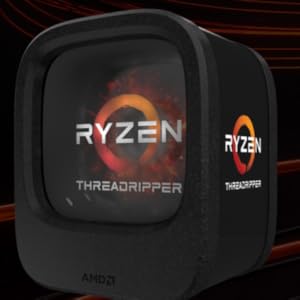
The AMD Ryzen Threadripper 1920X is a high-performance desktop processor featuring 12 cores and 24 threads, a massive 38MB cache, and 64 PCIe Gen3 lanes. With precision boost speeds up to 4.2 GHz and quad-channel DDR4 ECC memory support, it’s engineered for professionals who demand exceptional multitasking, rendering, and gaming capabilities. Designed to run cool and stable even under heavy loads, this CPU redefines desktop power for creators and tech enthusiasts alike.


| ASIN | B074CBJHCT |
| Best Sellers Rank | #210 in Computer CPU Processors |
| Brand | AMD |
| Built-In Media | Processor, installation tool |
| Cache Memory Installed Size | 38 MB |
| Customer Reviews | 4.7 4.7 out of 5 stars (1,025) |
| Global Trade Identification Number | 00730143308786 |
| Item Type Name | Ryzen Threadripper 1920X |
| Item Weight | 3.2 ounces |
| Manufacturer | AMD |
| Model Number | YD192XA8AEWOF |
| Platform | Windows |
| Processor Brand | AMD |
| Processor Core Count | 12 |
| Processor Count | 8 |
| Processor Number of Concurrent Threads | 32 |
| Processor Series | Ryzen Threadripper 1920X |
| Processor Socket | Socket TR4 |
| Processor Speed | 4 GHz |
| Secondary Cache | 38 MB |
| UPC | 730143308786 |
| Unit Count | 1.0 Count |
| Warranty Description | 3 Year Limited |
| Wattage | 180.0 |
V**R
12 Core for $200 - Yes, $200
CAUTION - THE INCLUDED SCREWDRIVER LIKE MANY OTHERS DID NOT RELEASE ON THE RIGHT TENSION! THIS CAN CAUSE DAMAGE IF YOU OVERTIGHTEN! Aside from the initial issue of the screwdriver; I stopped as I felt it was too much force and watched install videos, confirming I have put about as many turns as they have without it popping out to indicate it's tightened. I would recommend watching these so you don't overtighten as this can damage the motherboards socket or the CPU. The CPU: I have long since been an intel fanboy, but not anymore. Temperatures: With a Noctua TR4 cooler, expect 23C-33C Idle with 40-48C under load. The max I believe I've seen was 53C with a very high amount of CPU usage likely from an unoptimized piece of software. It runs cooler than all of my intel chips, including one that was watercooled while this is on an air cooler. Performance: It does everything. At once. You'll need lots of RAM if you want to do everything at once depending on what you do. If you want to play a game, stream said game, render graphics to a file you should get no less than 32GB of 3600 MHz memory, most of these TR4 boards support up to 128GB RAM. If you do graphics work, video editing, rendering and still want a PC you can use to have fun; this is a great CPU. I'll never get less than this in the future and it makes a quad core look like a toaster. Normal retail price is $800, it's been on sale often for $200, and moves up to $262 lately. The boards are expensive generally around $250-$350, but well worth the cost to have up to 3 NVMEs, 8 DIMM slots and a high cap of 128GB RAM. 10/10 Highly recommend, and would recommend further Threadripper CPUs they release.
E**S
Great CPU, just research & plan out your motherboard and RAM carefully, it's not one size fits all
There are a lot of claims going around that this CPU requires water cooling so I tested it. Mine easily and stably overclocks to 4.0GHz with a single-fan noctua NH-U14S TR4-SP3. Could possibly clock a little higher with liquid cooling but I haven't attempted it, even though there's plenty of thermal headroom. My CPU only runs a degree or 2 hotter with the noctua than with h115i. This processor also plays nice with high speed RAM, just make sure you get an asus motherboard if you want to hit 3600mhz on 128GB. I tested 3600mhz on 64gb with the zenith extreme and it works, but I ultimately chose the asrock x399 fatal1ty professional gaming for size reasons and my GPU wouldn't fit on the first slot of the zenith extreme. There are lots of other benefits to the asus boards but there are some unique benefits to the fatal1ty board, like onboard 10G lan for what that's worth. So with the asrock board I've been able to run 3200mhz on 64gb. It doesn't say anywhere in the manual or elsewhere that the board does not support 3600mhz, but if you select 3733mhz, it will revert to 2166 when you boot into windows. And when I selected 3600mhz, it'd boot and run at that number but crash as soon as i ran a program like google chrome. Tried it at lower and lower rates until I got to 3200mhz which is completely stable, so I'm guessing that's just a known limit but asrock's customer support is unaware of it. So yeah the threadripper is an amazing CPU but there are some things you gotta plan out in advance for your system. By the way, if you want to boot off an NVMe RAID array, this is definitely the platform to go with. The setup isn't trivial but it's this versus intel VROC, so there you go.
P**Y
Holy crap, this thing's fast
Holy crap, this thing's fast. I upgraded from a 4 core I7 Intel processor. My old rig couldn't keep up with editing 4K video without badly stuttering. This thing does 4K previews with transitions and effects at something like 20% CPU utilization. I did mate it with a killer graphics card (ASUS ROG-STRIX-GTX1080TI 11GB), but this CPU deserves the best! I'm not an overclocker, so I'm not pushing the limits, but I suspect this thing has enough horsepower for anything without overclocking. I had never built a water cooled rig before, but it was pretty straightforward. I used an all in one NZXT Kraken X52 and it works fine. For the motherboard, I used a ASRock X399 Professional Gaming board, populated it with 64 GB in four 16 GB DDR4 2400 ECC Kingston Valueram. I like the fact that AMD allows this "consumer" CPU the ability to use ECC RAM, unlike Intel which now requires the use of the "server" chips if you want to use ECC. The only integration glitch I had was installing Windows 10 - I had to disable the IOMMU option in the BIOS (I think it was buried in the Northbridge or Southbridge sub menu).
S**D
Great for multistream 4k video editing
I think this is a great CPU. It is relatively easy to install if you get a motherboard with the Lotes CPU Socket - not Foxconn! Foxconn is horrible (see reviews online about it). I have only played a few games on it (Fallout 4 mostly) and it has no problem in 1080 Ultra settings (but that's mostly GPU anyway - which I'm getting a slight bottleneck due to going with a midrange video card due to budget restraints). I got this CPU for 4k video editing. I'm using Vegas Pro and a few other editing programs, and coming from an old i7-2600k, it blows it out of the water (I mean, if I were liquid cooling - which I'm not. I'm using the Noctua NH-U14S TR4-SP3 and it works great with it). I can render out a 10 minute 4k edited project with 5 audio and video tracks (complete with color grading and multiple effects) downsampled to 1080 24p (16MB bit rate) in about 6 minutes. Then I can take that same completed 10 minute 1080p video and render that out to DVD 24p (720x480, 8MB) in 57 seconds. I've only had the Threadripper 1950x for a few days, so I'm still testing and playing around with it - but I love it so far!
M**D
Avec son prix actuel de 430 €, il est difficile de trouver un autre produit qui apporte plus que ce qu'offre un Threadripper 1920x. Vous imaginiez avec un processeur 12c/24t à ce prix il y a deux ans ? En tant qu'infographiste, j'en suis très satisfait. Aucun problème avec la mémoire vive en quad-channel (DDR4 4x8 Go 3200-CL14). Des performances gaming qui ne sont pas au top du top, mais qui restent très bonnes. Un gain de temps monumental sur la plupart des lourds calculs des logiciels de création. Et surtout, une plateforme qui sera flexible à l'avenir... presque tout pour séduire, en bref.
H**O
Very pleased with the performance and quality. Been using Intel almost exclusively for a very long time, but decided to take the chance and very happy I did. Built a very fast gaming computer, which also serves as a developer and editing machine. Very fast indeed.
B**N
took me a while to get all the parts and this part didnt work. and i missed return period. where the hell is the warranty claim selection???
P**X
Dieser Prozessor ersetzt meinen billigen betagten I5 3570K, mit dem ich jahrelang 3D-Rendering, Videoschnitt und Programmierung (hauptsächlich C++) betrieben habe. Man mag durchaus berechtigt einwenden, dass das für diesen Aufgabenbereich alles andere als der bestgeeignete Prozessor war - aber fast ein Jahrzehnt lang hat Intel uns Desktop-Nutzer ja mit 4 Kernen und kümmerlichster Weiterentwicklung kurz gehalten. Mehr Kerne gab es durchaus als "Extreme"-Edition oder Workstation-Hardware zu kaufen - zu exorbitanten Preisen. Und dazu war ich einfach zu geizig, da die Aufgaben, die Höchstleistung erforderten, nur einen gewissen Teil meiner Arbeit ausmachen. Aber es hat mich natürlich sehr gefreut, dass AMD endlich eine relativ günstige Alternative auf den Markt gebracht hat (wenn auch deutlich teurer als mein altes System), und bisher habe ich den Kauf auch nicht bereut. Die Multithreading-Leistung ist einfach gewaltig, wie man sich auch in vielen Benchmarks im Netz überzeugen kann. Adobe Premiere exportiert Filme wahnwitzig schnell, DAZ Studio rendert ebenfalls unvergleichlich viel schneller. 3ds max war allerdings ein kleines Problem, da ich viele eher einfach gestaltete Szenen in eher niedriger Auflösung rendere, dafür aber sehr viele Bilder (9.000 pro Film-Minute). Zumindest der gute alte Scanline-Renderer schafft es bei derartigen Aufgaben nicht mal ansatzweise, die vielen Kerne/Threads auszulasten, und kümmert bei 10-20% Prozessorleistung herum. Beholfen habe ich mir damit, die Szenen einfach per Maxscript/Kommandozeile aufzusplitten - statt einem Renderer werden jetzt gleich 6 Renderer gestartet, und die lasten das System dann auch zu 100% aus. A propos auslasten: Am meisten hat mich neben der hohen Multithreading-Geschwindigkeit an diesem Prozessor erstaunt, dass er trotz 100% Auslastung immer noch sehr gut ansprechbar bleibt. Neben den 6 Renderern noch an der 3ds-max Szene weiterzuarbeiten, zu surfen, Videos zu schauen oder sonstige Dinge zu tun, ist überhaupt kein Problem. Man spürt absolut keine zähe Reaktion, Leistungseinbussen oder Ruckeln. Das kannte ich von meinem vorherigen System gänzlich anders. An ein Weiterarbeiten beim Rendern war nicht zu denken - es sei denn, man klaut dem Renderprozess die Kerne, dann wurde das Rendern aber natürlich noch langsamer. Vorwitzig geworden, habe ich dann einfach mal noch mehr Mäxe rendern lassen. Erst bei mehr als ~14 3ds max-Prozessen war dann Schluss mit flüssiger Reaktion. Phänomenal! Was das Programmieren angeht, hängt die Performance sehr vom Aufbau der jeweiligen Solution ab. Manche ältere Solutions sind noch auf Singlethreading (pro Projekt) ausgelegt, und natürlich merkt man bei diesen eher wenig Beschleunigung. Bei Projekten, die auf Multithread-Kompilierung setzen, ist das schon anders - allerdings hat mich diesbezüglich die Leistung nicht ganz so sehr umgehauen. Ich habe allerdings noch keine diesbezüglichen wirklichen Benchmarks gemacht (und bisher auch noch keine im Netz gefunden - dort findet man eigentlich nur Blender, Cinebench und die üblichen Verdächtigen). Edit: Mittlerweile habe ich mich etwas umgesehen und - wie eigentlich schon erwartet - widersprüchliche Ergebnisse gefunden. So wurde wohl der Linux-Kernel mit dem Threadripper in absoluter Rekordzeit kompiliert (http://winfuture.de/news,99333.html), andererseits liegt er in anderen Compile-Benchmarks selbst hinter 600$-Intels zurück und nur sehr knapp vor 390$-Intels (https://www.anandtech.com/show/11697/the-amd-ryzen-threadripper-1950x-and-1920x-review/11). Wie erwartet steht und fällt die Leistung also damit, wie gut das Projekt Multithreading ausnutzen kann. Mittlerweile habe ich auch mein aktuelles Haupt-Projekt (VS-Solution mit 36 Projekten - 3ds max plugins und Support-Libs wie z.B. FreeImage) komplett auf Multithreading umgestellt - es erreicht damit geschätzt durchschnittlich ordentliche 70% Auslastung und kompiliert damit schon sehr schnell. Also, vermutlich lohnt sich der Prozessor für so etwas schon, aber man muss die Compiler-Optionen entsprechend anpassen. Evtl. werde ich demnächst mal Messungen nachreichen. Bei aller Leistung bleibt der Prozessor angenehm kühl. Ich setze einen Noctua NH-U14S Luftkühler ein - eigentlich aus Verzweiflung, weil der AIO nicht ins Gehäuse passte. Mittlerweile habe ich aber schon in einigen Berichten gesehen, dass dieser Giganto-Luftkühler so ziemlich allen AIO's zumindest Paroli bietet, oft sogar deutlich besser kühlt und dabei schön leise bleibt. Im Leerlauf liegt er bei ca. 33°, bei Volllast bei ca. 55°. Der Einbau gestaltete sich überaus leicht - wenn man nach der Anleitung vorgeht, ist es wirklich kinderleicht, ohne Kraftaufwand und wirkt sehr robust. Dank seiner 2 Zen-Dies (plus 2 "Fake"/deaktivierte Dies) ist der Prozessor einfach gigantisch. Leider ist daher an mATX-Boards und somit schönen kleinen Gehäusen selbst bei einer geschickt verlegten Wasserkühlung nicht mal zu denken - solche Boards gibt es gar nicht erst. (Edit: Mittlerweile ist mit dem Asrock X399M Taichi tatsächlich ein mATX-Board angekündigt, was mich wirklich verblüfft hat. So bald es lieferbar ist, werde ich die Rezension entsprechend anpassen) Überhaupt sind die Boards sehr teuer. Bekommt man ein brauchbares Ryzen-Board (mATX) schon für 70€, fängt es beim Threadripper bei 350€ erst mal an (in meinem Fall MSI X399 Gaming Pro Carbon AC). Gut, diese Boards sind auch sehr gut ausgestattet - allerdings brauche ich das überhaupt nicht. Eine Grafikkarte und eine M.2-SSD reichen mir vollkommen aus. Nun, und so ein Board und Prozessor braucht dann auch eine doppelte CPU-Spannungsversorgung... kommt dann gleich noch was drauf für das extrateure Netzteil. Trotzdem bleibt das System aber wesentlich günstiger als eine vergleichbar leistungsfähige Workstation. Natürlich lässt sich mit dem Prozessor auch gut spielen. Als reines Spielesystem wäre es allerdings herausgeworfenes Geld, da nach wie vor viele Spiele nur wenige Kerne nutzen. Selbst der viel günstigere Ryzen stellt ihn in manchen Spielen dank des einfacheren Aufbaues in den Schatten. Generell ist die Singlethread-Leistung ok, aber nicht umwerfend. Viele wesentlich günstigere Intels stellen ihn diesbezüglich in den Schatten. Lahm ist er aber keineswegs; er leistet vielleicht ein paar Prozent weniger. Insofern gehe ich in meiner Wertung natürlich auch von meinen Anforderungen aus - für jemanden, der hauptsächlich spielt, kann das natürlich ganz anders aussehen. Vorsicht übrigens bei der Wahl des Netzteils - zumindest mein Board benötigt gleich 2 (zwei) CPU-Stromanschlüsse! +++ Enorm hohe Multithread-Leistung +++ Enorme "Elastizität" - System bleibt auch bei Vollast lange benutzbar ++ Leichter Einbau ++ Gute Kühler verfügbar ++ Gutes Preis-Leistungs-Verhältnis ++ Sehr viele PCI-Lanes, um mehrfache Grafikkarten, M.2-SSDs etc. anzubinden + zwar hoher Stromverbrauch bei Vollast - was allerdings durch die Geschwindigkeit wieder ausgeglichen wird. o Ausreichende Singlethreading-Leistung -- zu hoher Stromverbrauch bei Leerlauf (-- keine mATX-Boards verfügbar (aber angekündigt)) -- Boards und generell Peripherie (Netzteil, RAM) teuer
V**A
Una verdadera joya. Va como un tiro y el software amd Master es una maravilla. Puedes aprovechar los 16 núcleos o dejar algunos inactivos para gaming u otras tareas.
Trustpilot
2 weeks ago
1 week ago