We remain fully operational. Our teams are working around the clock to ensure your deliveries continue safely.

DOWNLOAD THE APP


Copyright © 2025 Desertcart Holdings Limited
DOWNLOAD THE APP



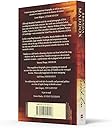

Buy Rosalind Franklin: The Dark Lady of DNA: The powerful historical biography of a pioneering woman in science by Maddox, Brenda (ISBN: 9780006552116) from desertcart's Book Store. Everyday low prices and free delivery on eligible orders. Review: An excellent attempt to strip away the mythology and find the person - This is an excellent book, both insightful and a damned good read. There is so much baggage around Franklin, none of her own making, and this book tries to strip this away and paint a picture of Franklin the person and the scientist. Franklin the person was prickly, snobbish - and perfectly human! As a scientist, I think her most important work was on X-ray crystallography of viruses; I've always felt her role in the DNA story was exaggerated by Watson in his book, in order to make Watson himself seem clever - back in the dawn of time when I was a first year Biochemistry student, my lecturer described the DNA story as "Crick did the work and Watson wrote the book". One of the nicest things I found out from this book was how close she became to Francis Crick, who is described as one of her favourite scientists; not something you'd expect from Watson's silly book. And on that topic, how about a biography of Crick, Ms. Maddox? Review: A tragic story, which must be known. - This book is well-written, it provides a very personal and moving perspective of Rosalind Franklin's life. The early part of the book felt at first to bit a bit heavy with details on family background, but as I later understood it was necessary to provide context for many interactions of Rosalind Franklin. I'm not a biologist or a physicist, so some of the technical details in the book were too complex to understand, but the writing is clear enough to grasp the general gist of the main events. I highly recommend this book to any one interested in the human side of science, and will be recommending this book to my colleagues.
| ASIN | 0006552110 |
| Best Sellers Rank | 84,350 in Books ( See Top 100 in Books ) 11 in Medical Genetics 55 in Engineer Biographies 58 in Medical Research & Equipment |
| Customer reviews | 4.6 4.6 out of 5 stars (459) |
| Dimensions | 12.9 x 2.67 x 19.71 cm |
| ISBN-10 | 0007185502 |
| ISBN-13 | 978-0006552116 |
| Item weight | 292 g |
| Language | English |
| Print length | 418 pages |
| Publication date | 7 April 2003 |
| Publisher | HarperCollins Publishers |
D**Y
An excellent attempt to strip away the mythology and find the person
This is an excellent book, both insightful and a damned good read. There is so much baggage around Franklin, none of her own making, and this book tries to strip this away and paint a picture of Franklin the person and the scientist. Franklin the person was prickly, snobbish - and perfectly human! As a scientist, I think her most important work was on X-ray crystallography of viruses; I've always felt her role in the DNA story was exaggerated by Watson in his book, in order to make Watson himself seem clever - back in the dawn of time when I was a first year Biochemistry student, my lecturer described the DNA story as "Crick did the work and Watson wrote the book". One of the nicest things I found out from this book was how close she became to Francis Crick, who is described as one of her favourite scientists; not something you'd expect from Watson's silly book. And on that topic, how about a biography of Crick, Ms. Maddox?
S**T
A tragic story, which must be known.
This book is well-written, it provides a very personal and moving perspective of Rosalind Franklin's life. The early part of the book felt at first to bit a bit heavy with details on family background, but as I later understood it was necessary to provide context for many interactions of Rosalind Franklin. I'm not a biologist or a physicist, so some of the technical details in the book were too complex to understand, but the writing is clear enough to grasp the general gist of the main events. I highly recommend this book to any one interested in the human side of science, and will be recommending this book to my colleagues.
B**P
Rosalind Franklin Reappraised
Rosalind Franklin became more widely known after Jim Watson published his famous account of the discovery of DNA - "The Double Helix". Watson's account of his relationship with, and the contribution of, Rosalind Franklin distorted the character of a complex woman and under-rated the contribution she made to Crick & Watson's elucidation of the helical structure of DNA. Since her death, feminists have promoted her career in much the same way as they did for Sylvia Plath, but the case for correcting an inaccurate portrayal of Rosalind Frankin's life and scientific contribution was always more solid. Brenda Maddox has written an admirable and readable biography which both corrects Watson's distortions while giving an intelligible and lucid account of the science behind the Crick-Watson-Franklin (for so it should read) breakthrough leading to the discovery of "the secret of life". This, together with Rosalind Franklin's more comprehensive achievements are best summarised in the obituaries (reproduced in this biography) published in "The Times" and "Nature" by the eminent crystalographer Prof. J.D. Bernal.
S**T
Sad story appropriate for week of international women's day yesterday
The used book was in very good condition. A very detailed biography of Rosalind Franklin's sad but amazing contributions to science despite the misogyny and difficulties she faced.
C**E
Rosalind Franklin
Have always been intrigued by the story of Rosalind Franklin and her unrecognised contribution to the discovery of DNA. Would things have been different if she had been a man or of a different personality? I hope that by now the Nobel prize is awarded solely for the quality and importance of the discoveries made.
A**R
Five Stars
Non fiction but reads like a novel. The interesting and inspiring story of a truly remarkable woman.
A**R
No place for an ending but somewhere to start
The one balanced account of the life and times of Rosalind Franklin that I'm aware of. The rogue Dr Watson strays his own strange ways (but has more to say on the science part) in the Double Helix, Ann Sayres book (which I havent read) I understand to be a friends portrait. To conclude, if you are only going to read one book on the topic, this is your choice, if for some reason, you are really motivated, go for the three of them for a three way perspective. Overall, I enjoyed the book, but I get the feel that Maddox never manages to really get to know her main character because the people who can give a personal account are either too befriended or guilt ridden. Also beware that the science part is by necessity simplified, but at the price of making the scientists look like fools (which they were not).
M**T
Well written and researched book on a scientist who died ...
Well written and researched book on a scientist who died too young. Knew a bit about it before but this book makes you feel you know all the people in it. Shall be looking for more of her work. Very impressed
L**A
Era da tanto che volevo leggere la storia di Rosalind Franklin raccontata da Brenda Maddox. Un libro bellissimo che parla della storia di una donna che ha amato la ricerca e che è morta inseguendo il sogno di una scoperta. Consigliato a tutte quelle persone che vogliono conoscere l'altra faccia della scoperta del DNA. Consigliatissimo!!
M**S
Livros bem embalados todos no plastico de proteção, ja quero mais., chegaram antes do prazo! uma leitura maravilhosa, adorei, amei,
D**A
El libro llegó roto, rayado y sucio. Fuera de eso, un buen libro si quieres una 1ra edición.
N**L
If you want to read a biography of Rosalind Franklin you have a choice between two separate efforts: "Rosalind Franklin and DNA" by Anne Sayre (1975) or "The Dark lady of DNA" by Brenda Maddox (2002). By the author's own admission, Sayre's book is not really a biography but a protest to Watson's own book. What Maddox offers here is a much more balanced view, even if at times I had the impression she was somewhat partial towards Franklin and a bit derisive about Watson. This might be entirely justified though, because according to most people who have known her personally, the portrait of Franklin that was painted by Watson in "The Double Helix" was a caricature. Since the publication of "The Dark Lady of DNA" we have a much better appreciation of who Rosalind Franklin was, both as a person and as a scientist. This book covers Franklin's entire life and is extremely well researched. This effort was motivated by a desire to rectify the false impression many people had about Franklin after reading "The Double Helix". That is why Maddox is very critical of Watson throughout the book. The only time she took his side was when she mentioned a personal anecdote about the nickname Rosie: "This diminutive is not as inherently insulting as many critics of Watson's 'Rosy' in "The Double Helix" have suggested. When I first arrived in England from Massachusetts, I shared a flat with an Anglo-Irish Reuters journalist named Rosanna Groarke, and routinely addressed her, although no one else did, as 'Rosie'. It seemed a sign of American friendliness." After reading this book I had a much better understanding of the role played by Franklin in the discovery of the DNA structure. But a few issues remain opaque. For example, it is still not clear for me what was Franklin's position at any given time towards the possibility of a double helix structure for the DNA molecule. For instance she made a lot of fuss around her conviction that the A form was not a double helix. She even wrote a mocking death notice to that effect. But Crick and Watson thought it was a double helix and they were right. For technical reasons she more readily recognized that the B form should be a double helix. But we don't know when exactly she came to that conclusion, and what impact it had on her comprehension of the A form. Perhaps we don't have enough material at our disposal to be able to follow Franklin closely in the evolution of her thinking. In that respect it was a lot easier to follow Watson's account in "The Double Helix". On the other hand what Maddox did make very clear is how cautious Franklin was in her scientific investigations. She proceeded step by step and was very methodical. This approach is less risky but takes longer. While Watson and Crick were often careless she may herself have been too careful at times. However, these two opposite approaches are essential to the evolution of science, for they represent complementary attitudes that can both yield good results. And the elucidation of the DNA structure illustrates that particularly well. It is generally acknowledged that Crick and Watson relied heavily on the data meticulously collected by Franklin. And this allowed them to ground their intuitions and deductions on experimental evidences. In science we often see experimentalists working hand in hand with theoreticians. However, in this particular case vital informations were obtained by Crick and Watson without the consent and knowledge of Franklin. This may partially explain why it took so long to recognize the value of her contribution. What we find in this biography is a much more elaborate and sophisticated portrait of Franklin than can be found in "The Double Helix". What we come to realize is that the comments made by Watson in his "myth making narrative" reflects only a short segment of her life. This sad episode was very painful to her at the time and the whole situation became unbearable after a while. She must have learned a great deal from that experience and it probably made her mature more rapidly. Although she did not have very long to live she entered the most productive period of her career after her departure from King's. For the context in which she was now evolving was very different once she had left behind the poisonous atmosphere prevailing at her previous institution. And this new life offered her the opportunity to better demonstrate the full extent of her scientific abilities. Everything becomes clear after we learn that when Franklin was hired to work on DNA she was under the impression that this new field of investigation would be entirely hers. But she met stiff resistance from Maurice Wilkins who had been told more or less the same in regards to his own posture. The immediate consequence was that cooperation ceased before it had even started. The situation rapidly deteriorated and turned into an unproductive turf war. Instead of cooperating with each other they ended up cooperating with Crick and Watson, with whom they were unknowingly competing. The odd couple Wilkins/Franklin failed to appreciate how determined the dynamic duo Crick/Watson was to solve the same problem they were working on. The bizarre circonstances prevailing at the time brought the worst out of Franklin. It mainly showed her darker side instead of displaying her brilliance, which had already been recognized abroad when she did post doctoral work in France. But thanks to the painstaking research carried out by Brenda Maddox, the Dark Lady of DNA can now rest in peace, knowing that her light now shines brighter than ever.
K**E
Deutsch: Ein schönes Denkmal für eine Frau die mit ihrem Sein und Taten unsere Hochachtung verdient hat. Dieses Buch erzählt nicht nur eine Geschichte über eine grosse Forscherin die keinen akademischen Titel erhalten hatte, aber der wissenschaftliche Wert ihrer Erkenntnisse wird sehr genau beschrieben. Ohne Rosalind Franklin hätten die Männer in ihrer Umgebung das Rätsel DNA nie gelöst. English: A beautiful Memorial for a woman who has earned our respect with their deeds. This book tells not just a story about a great researcher had received no academic title, but the scientific value of their findings is described very precisely. Without Rosalind Franklin, the men in their environment would have never solved the riddle of DNA.
Trustpilot
2 months ago
3 weeks ago