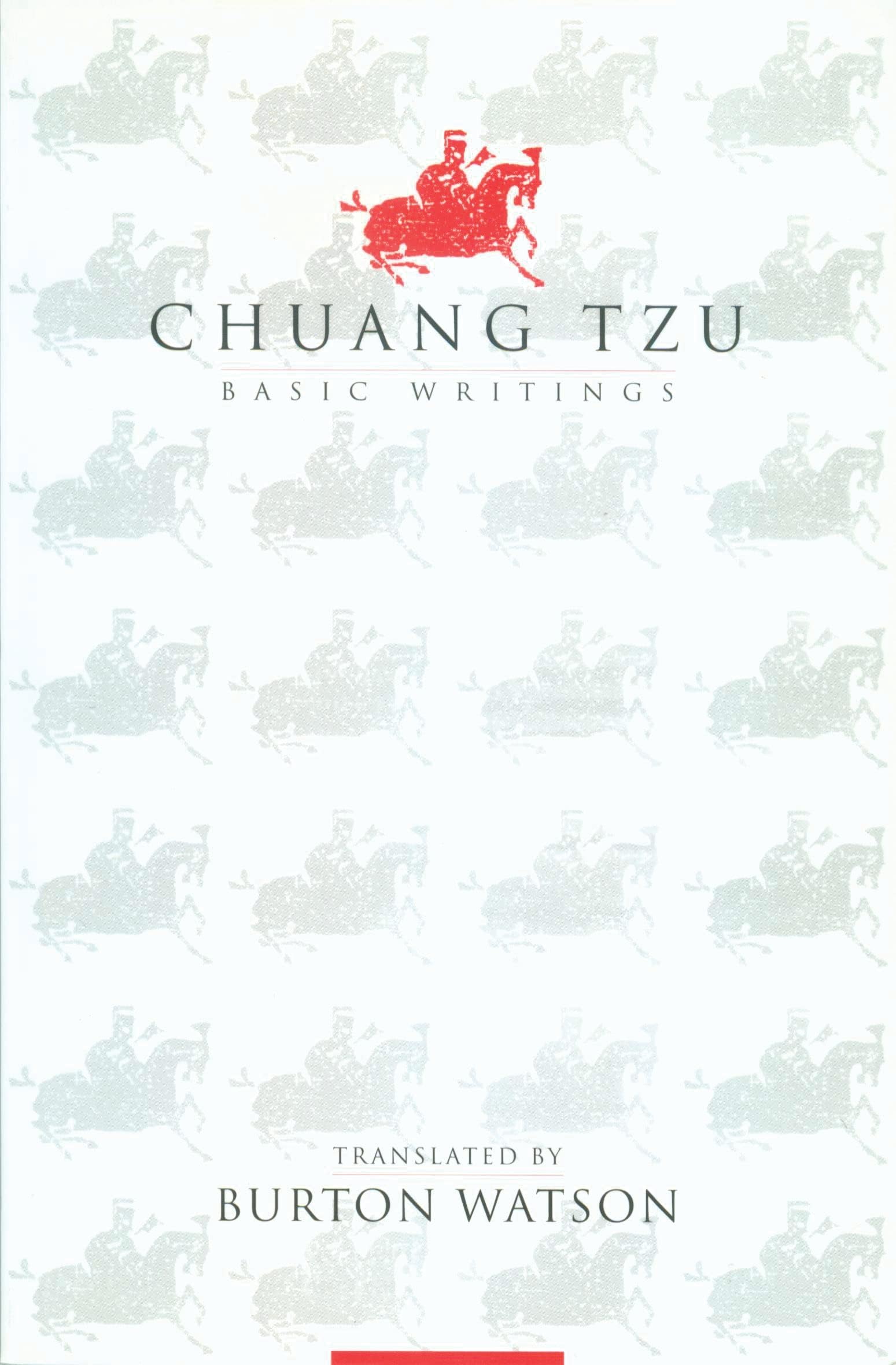
Chuang Tzu: Basic Writings
Product ID: 6604031
Desertcart purchases this item on your behalf and handles shipping, customs, and support to India.
The basic writings of Chuang Tzu have been savored by Chinese readers for over two thousand years. And Burton Watson's lucid and beautiful translation has been loved by generations of readers. Chuang Tzu (369?-286? B.C.) was a leading philosopher representing the Taoist strain in Chinese thought. Using parable and anecdote, allegory and paradox, he set forth, in the book that bears his name, the early ideas of what was to become the Taoist school. Central to these is the belief that only by understanding Tao (the Way of Nature) and dwelling in its unity can man achieve true happiness and freedom, in both life and death. Chuang Tzu: Basic Writings includes the seven "inner chapters," which form the heart of the book, three of the "outer chapters," and one of the "miscellaneous chapters." Watson also provides an introduction, placing the philosopher in relation to Chinese history and thought. Witty and imaginative, enriched by brilliant imagery, and making sportive use of both mythological and historical personages (including even Confucius), this timeless classic is sure to appeal to anyone interested in Chinese religion and culture.
| Dimensions | 7.95 x 5.15 x 0.49 inches |
| Edition | Revised ed. |
| Isbn 10 | 0231105959 |
| Isbn 13 | 978-0231105958 |
| Item Weight | 6.4 ounces |
| Language | English |
| Print Length | 160 pages |
| Publication Date | April 15, 1996 |
| Publisher | Columbia University Press |
User
Best introduction to the classic Chuang Tzu
The Chuang Tzu (rendered Zhuangzi in pinyin, which is becoming the standard transliteration these days) is second only to Lao Tzu's Tao Te Ching in its popularity and veneration in the Taoist world. If you've not heard of or read this book before, you're in for a real treat! The first time I read the Inner Chapters of the Chuang Tzu was like a revelation--the thoughts and ideas expressed in these passages still resonate today for their acuity, humor, satire, stabbing profundity, and life-changing potential. Indeed, after better understanding the thought this book expresses, I felt like so many loose ideas and insights I'd gleaned from other philosophy, literature, music, and poetry had been tied up together and formulated into a concise and elegant package that is urgently relevant to every day life--pretty amazing for a text that is well over 2000 years old!I recently completed reading the last of three complete translations of the Chuang Tzu, and I decided to wait until I read all of them before reviewing any of the three. Since this text is written in ancient Chinese, a language that was reserved for the intellectual and cultural elite two thousand years ago and has been considered effectively "dead" (like Latin) for quite a while, even understanding what the author(s) were trying to say is difficult, let alone translating the words from Chinese to English. So I figured reading a few different translations is probably the best way to get a broad and deep understanding of the text, and the cumulative effect would make up for each translation's weaknesses. This proved a good strategy--the other translations I chose were Victor Mair's Wandering on the Way: Early Taoist Tales and Parables of Chuang Tzu and A.C. Graham's The Inner Chapters. All three were rewarding and worthwhile reads (I mean, it IS the Chuang Tzu!), but I still come back to Burton Watson's The Complete Works of Chuang Tzu as my favorite. I won't go into depth about what the Chuang Tzu says, since the writing in the text is so eloquent and vivid that any description won't do it justice, and because I would probably ramble on forever about either the academic issues and questions regarding the text's authorship, historicity, and philosophy, or about how mind-blowingly intellectually stimulating it is!After reading three different translations of the Chuang Tzu, I have to say that this Basic Writings translated by Watson is the best place for the uninitiated to start--it contains nearly all the best ideas and passages from the text (which has many interpolations from other, later authors that are often not as interesting and never as well-written as the ideas expressed in the Inner Chapters). Graham's translation is very academically rigorous, but makes Chuang Tzu's already distant culture and time period even more distant for new readers by means of very technical terminology and commentary. Mair's translation is good but doesn't flow as well as Watson's, and it's also much longer since it contains the entire Chuang Tzu. Watson's Complete Works is great, but this Basic Writings is much cheaper and more concise an introduction--once you read it and get hooked on the surprisingly fresh insights of these ancient thinkers, perhaps you'll delve into some other illuminating translations--until then, I have to say that this should be required reading for anyone interested in philosophy or Eastern classics.
User
An amazing book
This is a very difficult book to describe because it is written almost as a fable, that continually plays on language and the supposed logic of common sense.It is difficult reading. I had to read it at least twice, and then several passages more times before I could take away meaning from it.If you enjoy the Tao Te Ching, The Diamond Sutra, Nagarjuna's verses of Emptiness, and other similar buddhist / zen / tao titles, I can say with near certainty that you will greatly enjoy this book.It is not for everyone. A person without any background buddhism may find this book to be incomprehensible and or a very difficult read.I enjoyed it thoroughly, and consider it to be among the best books I have ever read.
User
Really makes you think and its wonderful
One of the greatest philosophers in China and his writings are very enjoyable to read. Watson does an excellent job with his translations. Must read for anyone with an interest in ancient Chinese thought or Daoist thought.
User
Not as short or concise as The Lao Tau.
Prefer shorter, more concise verses in the Lao Tzu. Some of these sections go on too long. But still interesting and historical.
User
A SPIRITUAL MASTERPIECE
Oh Chuang Tzu thou art the greatest teacher.To Understand this book properly one must be spiritually awakened.I am not speaking of idiots who go and read religous books and light candles,i am talking about the truly awakened one.This book is so valuable,you have no idea.Everything you need is in here.The knowledge in here is worth Fort Knox x 100000.Oh CHUANG TZU THOU ART THE GREATEST TEACHER.
User
Do not buy
This is an awkward translation and it's poorly organized. There's no good introduction or exposition to put the content in context. The table of contents doesn't help. Some parts are in Mandarin. Maybe if you can read Mandarin, the organization will make more sense to you. . ?The low-quality paper and the awful, letter-press-looking typesetting make me fairly certain that the book is an unrevised facsimile of an outdated edition.
User
Amazing read. Best translation.
One of my all time favorite books. I read it every year or two and find new things in it each time. I've read multiple translations and this one is by far the best!
User
Good Translation, Please Add Page Numbers to Kindle
The translation is solid, but I was using this e-book for school so the lack of page numbers made following along rather difficult. Everything is great, but page numbers in almost any converted e-book, these days, are basically a must especially for education!
Trustpilot
1 month ago
1 month ago