
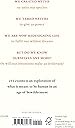
21 Lessons for the 21st Century Paperback
Product ID: 69890112
Desertcart purchases this item on your behalf and handles shipping, customs, and support to India.
Full description not available
A**N
This is a philosophy of life as it is lived in the modern world
I did a cover-to-cover preview, having received my copy of it late yesterday afternoon. I actually spent about two hours, reading short excerpts and getting a feel for how the writer marshals his facts and crafts his arguments. From there, I previewed the enumerated topics of the book, following the flow of argument and the evidence Yuval Noah Harari refers to make his point. The main thing about this book is to understand that the 21st century is going to be unlike anything humankind has experienced in the past. Our prior experience will not necessarily be a trustworthy guide to our future as a species. Harare is an Israeli Jew who came to knowledge of the world rather late. Growing up he mentions that his education Israel was utterly devoid of knowledge of European and world history, nor was he aware of the historical developments that characterized the Middle Ages, the Age of Exploration and European conquest of the non-European world. He knew of European history only in so far as it gave him an understanding about how he and his forebears ended up in the Land of Israel. Coming onto the subject cold, this new cornucopia of knowledge offered him certain advantages insofar as you learn to take nothing for granted or at face value. For people who emigrate to a new land, with different attitudes and customs from those they have known, there is the painful process that all immigrants experience in figuring out who they are, and how quickly they need to learn how to survive in this new environment. Harari is perhaps among the most incisive and farseeing writers I have encountered in recent times. He holds a PhD from Oxford University (no mean feat), and for someone who apparently spent his early years speaking and writing a non-Western language (Hebrew), his ability to translate his thoughts into English, and writing as well as he does, is an accomplishment that is beyond the reach of most other recent immigrants I have encountered in my lifetime. He must've spent an enormous amount of time with the Oxford Dictionary of the English Language!It is clear to me that Harari is onto something. The strangeness that people feel when they run up against stuff they don't know, and have difficulty figuring out what to do, is going to be far beyond the cultural and linguistic barriers that recent immigrants typically experience. With English, there are thousands of words that have more than one meaning, and thousands of words that have shared meanings, depending upon context, and intent.Harari is telling his readers to experience the strangeness that he must've felt speaking, writing, and using the English language for the first time. Most Americans are not used to learning foreign languages, because people come to America where relatively few people other than recent immigrants routinely converse and whatever other languages they happen to be trained in, or learn from infancy.Briefly, the outline of this book is as follows.In Part 1, Harari begins with a discussion of what he terms, "The Technological Challenge"., Followed by the head note reading, "Humankind is losing faith in the liberal story that dominated global politics in recent decades, exactly when the merger of Biotech and Infotech confronts us with the biggest challenges humankind has ever encountered."He starts with, "Disillusionment; The End of History Has Been Postponed". Basically, Harari argues that humankind, having conquered the world, is vulnerable to technology that turns out to be an insidious threat to what it means to be human. He states that liberalism, as it used to be practiced at large in the world has reached something worse than just simply being a dead end, its consequences are becoming perverse. But conservatives should take no comfort from liberalism's embarrassment; nobody really wants to live in an authoritarian or fascistic state.In today's world, 'work' is purposeful activity that society finds to be commercially useful, and worthy of paying money to people to perform whatever it is they do to make work productive. Harari says that work as we know it may become scarce because the skills that people acquire over a lifetime to make themselves productive enough to earn a living out of those activities, may be taken over by Artificial Intelligence, in which jobs that are not only repetitive, but includes those that require some form of judgment and discretion may become subsumed in the kind of tasks that AI can do more cost-effectively than people can. Undoubtedly, there will be numerous fixes that will be attempted to preserve jobs, but their prospects are likely to be some form of a rearguard action to delay the introduction of AI into those workspaces. Those worst off will likely be unskilled laborers were currently employed in Third World countries overseas at minimum wages. They will find that their labor is superfluous when a high tech companies in Silicon Valley, California, and elsewhere figure out how to harness 3D printers and comparable technologies to accomplish end-to-end production lines from concept to finished product for just about anything that is manufactured overseas.So how do ordinary people earn money to meet their needs? How are they to be supported if they are not working in the private sector, for wages or salaries, and how much money will they need to survive. We are looking at Nth-degree consequences of a world in which machines and computer bots can manufacture whatever is needed to sustain human life. Programs of education and training need to be right-sized to meet the needs of the society as it exists nominally at the time of its inception, but for a generation or two down the road as school children mature into maturity, and thereafter into old age.Political liberty and freedom are also on the auction block. What we experience today is freedom of choice, and how choices are arrived at, comes relatively recently in human history. Decision-making follows a well-trodden path where alternatives are weighed and measured, until the final choices made; what happens when humans are influenced by outside forces that they cannot fathom some of the choices they make benefit someone else, rather than themselves? What is to be said about 'free will' in the face of an AI algorithm that simulates human thinking and emotion? What can we say about 'Equality', when all meaningful data are owned by other people or corporate entities?I'll leave the review here at this point, because having laid out some of the basic questions that Yuval Noah Harari writes about, I'll invite readers to find out for themselves by reading this highly provocative book.
S**.
Amazing historical view of current events .
Amazing analysis of current events with historical context.
G**R
Contrasts history and religion with projected impact of artificial intelligence and bio-technology
This 2018 book entitled: “21 Lessons for the 21st Century” by Yuval Noah Harari was a thought-provoking look at the future and the impact of technology including artificial intelligence (AI) and bio-technology. The book is worth purchasing and reading but the 21 lessons were a bit obscure, at least to this reviewer, notwithstanding that the book contained 21 chapters. Moreover, whether or not the author is a good prognosticator of the future remains to be seen; none-the-less some of his predictions, may help individuals do contingency planning. Harari veers off into a variety of personal views important to him and undoubtedly of interest to some others. Some will find his historical look at various world religions as academic and informative while others might be offended. Illustrative of style and content of this book, Harari writes: “My first book, Sapiens, surveyed the human past, examining how an insignificant ape became the ruler of planet Earth. Homo Deus, my second book, explored the long-term future of life... In this book I… zoom in on the here and now, but without losing the long-term perspective.” Harari writes: “A single mother struggling to raise two children in a Mumbai slum is focused on where she will find their next meal; refugees in a boat in the middle of the Mediterranean scan the horizon for any sign of land... They all have far more urgent problems than global warming or the crisis of liberal democracy… Climate change may be far beyond the concerns of people in the midst of a life-and-death emergency, but it might eventually make the Mumbai slums uninhabitable, send enormous new waves of refugees across the Mediterranean, and lead to a worldwide crisis in healthcare.” Harari writes: “this book is intended… as a selection of lessons. These lessons… aim to stimulate further thinking… The merger of infotech and biotech might soon push billions of humans out of the job market and undermine both liberty and equality. Big Data… algorithms might create digital dictatorships in which all power is concentrated in the hands of a tiny elite while most people suffer not from exploitation but from something far worse—irrelevance… Philosophers are very patient people, but engineers are far less so, and investors are the least patient of all… Humans think in stories rather than in facts, numbers, or equations, and the simpler the story, the better.” Harari writes: “Some… just don’t want to give up their racial, national, or gendered privileges. Others have concluded (rightly or wrongly) that liberalization and globalization are a huge racket empowering a tiny elite at the expense of the masses… The liberal political system was shaped during the industrial era to manage a world of steam engines, oil refineries, and television sets. It has difficulty dealing with the ongoing revolutions in information technology and biotechnology…” Harari writes: “Democracy is based on Abraham Lincoln’s principle that “you can fool all the people some of the time, and some people all of the time, but you cannot fool all the people all the time.”… Russia is one of the most unequal countries in the world, with 87 percent of wealth concentrated in the hands of the richest 10 percent of people… Humans vote with their feet… I have met numerous people in many countries who wish to immigrate to the United States… But I have yet to meet a single person who dreams of immigrating to Russia… For every Muslim youth from Germany who traveled to the Middle East to live under a Muslim theocracy, probably a hundred Middle Eastern youths would have liked to make the opposite journey and start a new life for themselves in liberal Germany… throughout the world… even if they describe themselves as “anti-liberal,” none of them rejects liberalism wholesale. Rather, they… want to pick and … choose their own dishes from a liberal buffet… Even some of the staunchest supporters of democracy… have become decidedly lukewarm about allowing too many immigrants in.” Harari writes: “But liberalism has no obvious answers to the biggest problems we face: ecological collapse and technological disruption... [In] the twentieth century, each generation—[worldwide]—enjoyed better education, superior healthcare and larger incomes than the one that came before it… [But] the… prospect of… unemployment—leaves nobody indifferent… Some believe that… within… a mere decade or two, billions of people will become economically redundant. Others maintain that even in the long run automation will keep generating new jobs and greater prosperity for all... Fears that automation will create massive unemployment go back to the nineteenth century, and so far they have never materialized.” Harari writes: “What we are facing is not the replacement of millions of individual human workers by millions of individual robots and computers; rather, individual humans are likely to be replaced by an integrated network… AI doctors could provide far better and cheaper healthcare… particularly for those who currently receive no healthcare… at all… a poor villager in an underdeveloped country might come to enjoy far better healthcare via her smartphone...” Harari writes: “in the long run no job will remain absolutely safe from automation… After IBM’s chess program Deep Blue beat Garry Kasparov in 1997, humans did not stop playing chess. Rather, thanks to AI trainers, human chess masters became better than ever, and at least for a while human-AI teams known as “centaurs” outperformed both humans and computers in chess… A closer look at the world of chess might indicate where things are heading… [In] 2017, a critical milestone was reached, not when a computer defeated a human at chess—that’s old news—but when Google’s AlphaZero program defeated the Stockfish 8 program. Stockfish 8 was the world’s computer chess champion for 2016. It had access to centuries of accumulated human experience in chess... It was able to calculate seventy million chess positions per second. In contrast, AlphaZero performed only eighty thousand such calculations per second, and its human creators had not taught it any chess strategies—not even standard openings. Rather, AlphaZero used the latest machine-learning principles to self-learn chess by playing against itself. Nevertheless, out of a hundred games the novice AlphaZero played against Stockfish, AlphaZero won twenty-eight and tied seventy-two. It didn’t lose even once. Since AlphaZero had learned nothing from any human, many of its winning moves and strategies seemed unconventional to the human eye… guess how long it took AlphaZero to learn chess from scratch, prepare for the match… against Stockfish, and develop its genius instincts? Four hours. That’s not a typo... AlphaZero went from utter ignorance to creative mastery in four hours, without the help of any human guide.” Harari writes: “even after self-driving vehicles prove themselves safer and cheaper than human drivers, politicians and consumers might nevertheless block the change for… decades… Government regulation can successfully block new technologies even if they are commercially viable and economically lucrative… For example… human “body farms” in underdeveloped countries and an almost insatiable demand from desperate affluent buyers. Such body farms could well be worth hundreds of billions of dollars. Yet regulations have prevented free trade in human body parts” Harari writes: “In the stock exchange… algorithms are becoming the most important buyers of bonds, shares, and commodities… The Google search algorithm [ranks] the web pages of ice cream vendors… the Google algorithm ranks first—[NOT] those that produce the tastiest ice cream… When I publish a book, my publishers ask me to write a short description that they use for publicity online. But they have a special expert who… goes over my text and says, “Don’t use this word—use that word instead. Then we will get more attention from the Google algorithm…” Harari writes: “with the rise of AI… cheap unskilled labor will become far less important… If AI and 3-D printers indeed take over from the Bangladeshis… the revenues that previously flowed to South Asia will now [flow] California.” Harari writes: “Within a few decades, Big Data algorithms informed by a constant stream of biometric data could monitor our health 24/ 7. They might be able to detect the very beginning of influenza, cancer, or Alzheimer’s disease, long before we feel anything is wrong with us. They could then recommend appropriate treatments, diets… custom-built for our unique physique, DNA, and personality… by 2050, thanks to biometric sensors and Big Data algorithms, diseases may be diagnosed and treated long before they lead to pain or disability… when you apply to your bank for a loan, it is likely that your application will be processed by an algorithm rather than by a human being. The algorithm analyzes lots of data about you and statistics about millions of other people and decides whether you are reliable enough to receive a loan.” Harari writes: “Today, the richest 1 percent own half the world’s wealth… the richest one hundred people together own more than the poorest four billion… If new treatments for extending life and upgrading physical and cognitive abilities prove to be expensive, humankind might split into biological castes… Humans and machines might merge so completely that humans will not be able to survive at all if they are disconnected from the network.” Harari writes: “the “clash of civilizations” thesis is false. Human groups—all the way from small tribes to huge civilizations—are fundamentally different from animal species, and historical conflicts differ greatly from natural selection processes… human groups may have distinct social systems, but these are not genetically determined, and they seldom endure for more than a few centuries…” Harari writes: “distortions of ancient traditions characterize all religions… The heated argument about the true essence of Islam is simply pointless. Islam has no fixed DNA. Islam is whatever Muslims make of it… Species often split, but they never merge. About seven million years ago chimpanzees and gorillas had common ancestors… Since individuals belonging to different species cannot produce fertile offspring together, species can never merge… Human tribes, in contrast, tend to coalesce over time into larger… groups… Ten thousand years ago humankind was divided into countless isolated tribes. With each passing millennium, these fused into… larger groups… remaining civilizations have been blending into a single global civilization…” Harari writes: “People across the globe are not only in touch with one another, they increasingly share identical beliefs and practices… Today, if you happen to be sick… you will be taken to similar-looking hospitals, where you will meet doctors in white coats who learned the same scientific theories in the same medical colleges. They will follow identical protocols and use identical tests to reach very similar diagnoses…” Harari writes: “Humans have been around for hundreds of thousands of years and have survived numerous ice ages and warm spells… cities, and complex societies have existed for no more than ten thousand years. During this period… Earth’s climate has been relatively stable… [but now] climate change is a present reality…[and] Humanity has very little time left to wean itself from fossil fuels… the mark of science is the willingness to admit failure and try a different tack… Over the centuries… the… world has increasingly become a single civilization. When things really work, everybody adopts them.” Harari writes: “global warming is a fact, but there is no consensus regarding the best economic reaction to this threat… Ancient scriptures are just not good guides for modern economics… religion doesn’t really have much to contribute to the great policy debates of our time… Religions still have a lot of political power… As more and more humans cross more and more borders in search of jobs, security, and a better future, the need to confront, assimilate, or expel strangers strains political systems… about immigration… it would perhaps be helpful to view immigration as a deal with three basic conditions or terms: TERM 1: The host country allows the immigrants in… TERM 2: In return, the immigrants must embrace at least the core norms and values of the host country, even if that means giving up some of their traditional norms and values... TERM 3: If the immigrants assimilate to a sufficient degree, over time they become equal and full members of the host country… When people argue about immigration, they often confuse the four debates…[and Harari explains... ]” Harari writes: “Racism was seen not only as morally abysmal but also as scientifically bankrupt. Life scientists… anthropologists, sociologists, historians, behavioral economists, and even brain scientists have accumulated a wealth of data for the existence of significant differences between human cultures… most people concede the existence of at least some significant differences between human cultures, in things ranging from sexual mores to political habits… consider the way different cultures relate to strangers, immigrants, and refugees. Not all cultures are characterized by exactly the same level of acceptance… Norms and values that are appropriate in one country just don’t work well under different circumstances… [and goes on to suggest] let’s imagine two fictional countries: Coldia and Warmland… Much the same thing happens to Coldians who immigrate to Warmland… Both of these cases may seem to smack of racism. But in fact, they are not racist. They are “culturist.” People continue to conduct a heroic struggle against traditional racism without noticing that the battlefront has shifted. Traditional racism is waning, but the world is now full of “culturists.”… Today, in contrast, while many individuals still make such racist assertions, they have lost all of their scientific backing and most of their political respectability—unless they are rephrased in cultural terms.” Harari writes: “The shift from biology to culture is not just a meaningless change of jargon. It is a profound shift with far-reaching practical consequences, some good, some bad. For starters, culture is more malleable than biology. This means, on one hand, that present-day culturists might be more tolerant than traditional racists—… In many cases there is little reason to adopt the dominant culture, and in many other cases it is… an all but impossible mission… A second key difference… is that unlike traditional racist bigotry, culturist arguments might occasionally make good sense, as in the case of Warmland and Coldia. Warmlanders and Coldians really have different cultures, characterized by different styles of human relations. Since human relations are crucial to many jobs, is it unethical for a Warmlander firm to penalize Coldians for behaving in accordance with their cultural legacy?” Harari writes: “The last few decades have been the most peaceful era in human history. Whereas in early agricultural societies human violence caused up to 15 percent of all human deaths, and in the twentieth century it caused 5 percent, today it is responsible for only 1 percent… The greatest victory in living memory—of the United States over the Soviet Union—was achieved without any major military confrontation… Like the United States, China, Germany, Japan, and Iran, Israel seems to understand that in the twenty-first century the most successful strategy is to sit on the fence and let others do the fighting for you.” Harari writes: “All social mammals, such as wolves, dolphins, and monkeys, have ethical codes, adapted by evolution to promote group cooperation… “Thou shalt not kill” and “Thou shalt not steal” were well known in the legal and ethical codes of Sumerian city-states, pharaonic Egypt, and the Babylonian Empire… A thousand years before the prophet Amos… the Babylonian king Hammurabi explained that the great gods had instructed him “to demonstrate justice within the land, to destroy evil and wickedness, to stop the mighty exploiting the weak… Many biblical laws copy rules that were accepted in Mesopotamia, Egypt, and Canaan centuries and even millennia prior to the establishment of the… kingdoms of Judah and Israel.” Harari writes: “Unfortunately, for other people religious belief actually stokes and justifies their anger, especially if someone dares to insult their god or ignores His wishes… As the last few centuries have proved, we don’t need to invoke God’s name in order to live a moral life. Secularism can provide us with all the values we need… many of the secular values are shared by various religious traditions… Secular education teaches us that if we don’t know something, we shouldn’t be afraid of acknowledging our ignorance and looking for new evidence… Questions you cannot answer are usually far better for you than answers you cannot question.” Harari writes: “behavioral economists and evolutionary psychologists have demonstrated that most human decisions are based on emotional reactions and heuristic shortcuts rather than on rational analysis, and that while our emotions and heuristics were perhaps suitable for dealing with life in the Stone Age, they are woefully inadequate in the Silicon Age… As Socrates observed more than two thousand years ago, the best we can do… is to acknowledge our own individual ignorance.” Harari writes: “In trying to comprehend and judge moral dilemmas people often resort to one of four methods. The first is to downsize the issue… The second method is to focus on a touching human story that ostensibly stands for the whole conflict… The third method of dealing with large-scale moral dilemmas is to weave conspiracy theories… These three methods try to deny the true complexity of the world. The fourth and ultimate method is to create a dogma, put our trust in some allegedly all-knowing theory, institution, or chief, and follow it wherever it leads us. Religious and ideological dogmas are still highly attractive in our scientific age precisely because they offer us a safe haven from the frustrating complexity of reality.” Harari writes: “Even the most religious people would agree that all religions, except one, are fictions… that does not mean that these fictions are necessarily worthless or harmful… you cannot organize masses of people effectively without relying on some mythology. If you stick to unalloyed reality, few people will follow you… If you want to gauge group loyalty, requiring people to believe an absurdity is a far better test than asking them to believe the truth… if all your neighbors believe the same outrageous tale, you can count on them to stand together in times of crisis… When most people see a dollar bill, they forget that it is just a human convention… We learn to respect holy books in exactly the same way we learn to respect paper currency” Harari writes: “How can we prepare ourselves and our children for a world of such unprecedented transformations and radical uncertainties?... people need the ability to make sense of information, to tell the difference between what is important and what is unimportant, and above all to combine many bits of information into a broad picture of the world… Many pedagogical experts argue that schools should switch to teaching “the four Cs”—critical thinking, communication, collaboration, and creativity… Most important of all will be the ability to deal with change, learn new things, and preserve.” Harari writes: “Planet Earth was formed about 4.5 billion years ago, and humans have existed for at least 2 million years… As for the future, physics tells us that planet Earth will be absorbed by an expanding sun about 7.5 billion years from now and that our universe will continue to exist for at least 13 billion years more.”
M**
Livro
Muito bom
A**R
21 lessons for the 21 century
Excelente libro, el autor en sí ya es una referencia y sus reflexiones de lo que ya está en puerta para todos nosotros son maravillosas
B**A
Must read
Everyone should read this book. I think is well known that Yuval Noah Harari is a tremendous writer and whatever he writes is a must read, just like Sapiens and homo deus this too is a must read. You will start reading and you'll forget about time
C**N
Ottima lettura
Ottima lettura.Consigli vivamente!Un libro che ci fa riflettere su quello che è il mondo in cui viviamo.
S**S
Fabulous
Excellent pressie for my son - great delivery.
Trustpilot
3 weeks ago
2 days ago