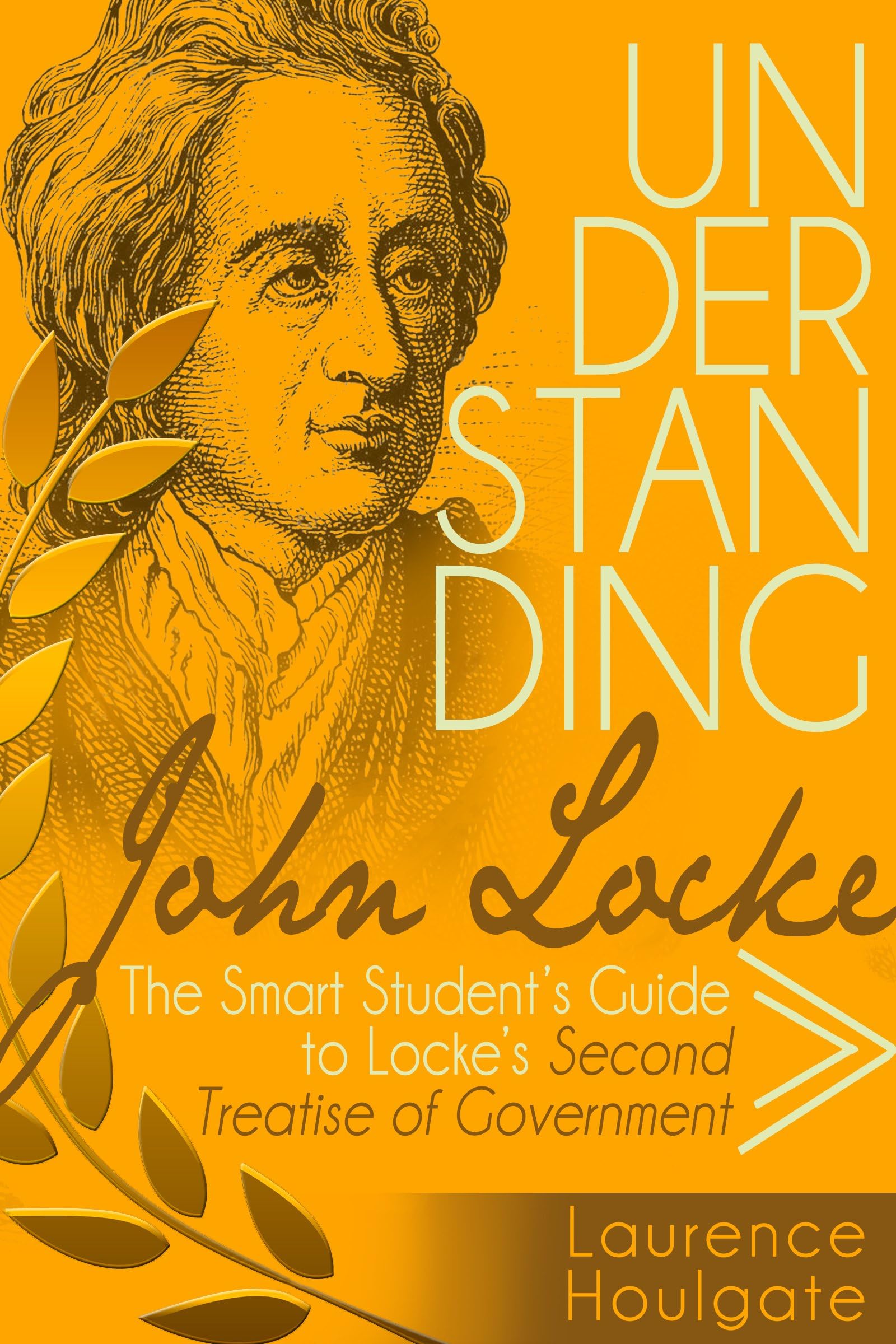
UNDERSTANDING JOHN LOCKE: The Smart Student's Guide to Locke's Second Treatise of Government (Philosophy Study Guides)
Product ID: 806276571
Understanding John Locke is the second book in a series of books on the classical philosophers. Other books in the Smart Student's Guide series are: Understanding Plato: The Socratic Dialogues and the Republic; and Understanding John Stuart Mill: Utilitarianism and On Liberty. The series is designed for beginning and intermediate philosophy students who would like more depth than they would ordinarily get from books that only give outlines of the philosopher's thoughts and theories. At the same time, the books do not delve so deeply and critically into the philosopher's ideas that they would only be accessible to graduate students and professors. Each book focuses on both content and philosophical method. Each chapter breaks down the arguments of the philosopher into understandable parts, showing how the philosopher reaches his conclusions and how he defends against possible objections. Each chapter concludes with a set of questions for thought and discussion. Some of the questions are on topics that provide an excellent starting point for term papers. References to other books about the philosopher or the topic can be found at the end of the chapter, in footnotes, textboxes or at the end of the book. John Locke is the intellectual father of two revolutions: the Whig revolt against absolute monarchy in 17th century England and almost 100 years later, the revolt of the American colonies against British rule, culminating in the founding of the United States of America. Thomas Jefferson, Thomas Paine, George Mason and James Madison all ranked John Locke as one of the most influential thinkers they consulted during the American revolution and the formation of the liberal constitutional state that emerged from it. The primary vehicle of this influence was John Locke's Second Treatise of Government. In Understanding John Locke, Laurence Houlgate takes the student along with him in a clear account and exploration of Locke's main theories about the nature and origin of political power, the state of nature, the state of war, the law of nature, the social contract, the origin of private property, the distinction between political, paternal and despotical power, the legitimate placing of political power, the separation of legislative and executive power, and the conditions for justifiable revolution. The book concludes with a postscript comparing and contrasting some of the political theories of Locke and his ancient Greek predecessor Plato. Review: Excellent Analysis and Exposition - One of the most important works in political philosophy is John Locke's 'Second Treatise of Government', and we are fortunate in having Professor Houlgate's analysis and commentary on Locke's work. Houlgate entitles his work “The Smart Student's Guide to Locke's Second Treatise of Government”. Much of the technical jargon that often accompanies serious commentaries on the works of important works in philosophy has been judiciously avoided but, fear not, the commentary provided here is refreshingly clear, thoroughly informed, well researched, and erudite. If one's conception of philosophy is that of the justification of one's basic beliefs and the analysis of the key concepts used in the articulation of those beliefs, one will find in Houlgate's commentary both. Key terms are defined as they come up (and a glossary at the end of the book lists the key definitions used throughout the text), and the text abounds with arguments that Locke uses (e.g., 'the inconsistency of absolute monarchy and civil society')--such arguments are broken down so that one can clearly identify premisses and conclusions. In the process of analyzing a philosophical text, Houlgate introduces the reader as to how a philosopher thinks (or should think). At he end of each chapter, there is a section titled ''Questions for thought and discussion” wherein some of the most important points introduced in the chapter are not only compared to the insights made by other philosophers, but the reader is encouraged to apply the more important principles enunciated in the chapter to various situations. All in all, Professor Houlgate has produced a bit of a gem that can be profitably read by students and non-students alike. Review: This is a very useful book for those - students and other non-experts - ... - This is a very useful book for those - students and other non-experts - who are reading Locke's Second Treatise. The author works his way through the text offering both explanations of what Locke is up to and critical remarks designed to get the reader thinking about Locke's positions and claims. Then at the end of each chapter, there are questions to answer, questions which probe the issues and which tf addressed by the reader further understanding. If I were teaching the Second Treatise I would certainly ask my students to read this book in connection with the main text.
| Best Sellers Rank | 1,116,853 in Kindle Store ( See Top 100 in Kindle Store ) 658 in Introduction to Philosophy 1,267 in Political Philosophy 3,272 in Test Preparation & Guides |
R**A
Excellent Analysis and Exposition
One of the most important works in political philosophy is John Locke's 'Second Treatise of Government', and we are fortunate in having Professor Houlgate's analysis and commentary on Locke's work. Houlgate entitles his work “The Smart Student's Guide to Locke's Second Treatise of Government”. Much of the technical jargon that often accompanies serious commentaries on the works of important works in philosophy has been judiciously avoided but, fear not, the commentary provided here is refreshingly clear, thoroughly informed, well researched, and erudite. If one's conception of philosophy is that of the justification of one's basic beliefs and the analysis of the key concepts used in the articulation of those beliefs, one will find in Houlgate's commentary both. Key terms are defined as they come up (and a glossary at the end of the book lists the key definitions used throughout the text), and the text abounds with arguments that Locke uses (e.g., 'the inconsistency of absolute monarchy and civil society')--such arguments are broken down so that one can clearly identify premisses and conclusions. In the process of analyzing a philosophical text, Houlgate introduces the reader as to how a philosopher thinks (or should think). At he end of each chapter, there is a section titled ''Questions for thought and discussion” wherein some of the most important points introduced in the chapter are not only compared to the insights made by other philosophers, but the reader is encouraged to apply the more important principles enunciated in the chapter to various situations. All in all, Professor Houlgate has produced a bit of a gem that can be profitably read by students and non-students alike.
M**.
This is a very useful book for those - students and other non-experts - ...
This is a very useful book for those - students and other non-experts - who are reading Locke's Second Treatise. The author works his way through the text offering both explanations of what Locke is up to and critical remarks designed to get the reader thinking about Locke's positions and claims. Then at the end of each chapter, there are questions to answer, questions which probe the issues and which tf addressed by the reader further understanding. If I were teaching the Second Treatise I would certainly ask my students to read this book in connection with the main text.
K**A
Scholarly, Yet Accessible
It's hard to combine scholarship with accessibility, but this little volume does it. It is very scholarly, yet clearly written and eminenly accessible to undergraduate students. Houlgate approaches each section by quoting the relevant text, giving an analysis of that section which points out the connections and inconsistencies with other sections, and when appropriate, giving the historical background for the ideas that it expresses, which is particularly rich when it comes to US history. I teach philosophy at the university level, and I would not hesitate to recommend this as an optional text, or even require it for a course with any emphasis in political philosophy. If you are taking a course in which Locke's treatise is being taught, you will be well served by this book, even if it was not assigned. And it won't break the bank!
A**Y
I highly recommend this book and was delighted that many of my ...
I highly recommend this book and was delighted that many of my students referenced it within papers to lean into the concepts of power and governments. This little study goes beyond the philosophy of Locke and uncovers the intention of his politics, slants, and concerns for government. It’s an easy read for a complex subject and pleasantly adds more interest to the study.. Author speaks in a language we can all understand and is concise in Lockes concepts which is an added surprise;.after reading the book we actually end up liking Locke
M**N
As advertised
Great book for learning about the constitution
Trustpilot
3 weeks ago
5 days ago