Notes from a Dead House (Vintage Classics)
Product ID: 806909396
From the acclaimed translators Richard Pevear and Larissa Volokhonsky comes a new translation of the first great prison memoir: Fyodor Dostoevsky’s fictionalized account of his life-changing penal servitude in Siberia. In 1849 Dostoevsky was sentenced to four years at hard labor in a Siberian prison camp for his participation in a utopian socialist discussion group. The account he wrote after his release, based on notes he smuggled out, was the first book to reveal life inside the Russian penal system. The book not only brought him fame but also founded the tradition of Russian prison writing. Notes from a Dead House (sometimes translated as The House of the Dead ) is filled with vivid details of brutal punishments, shocking conditions, feuds and betrayals, and the psychological effects of the loss of freedom, but it also describes moments of comedy and acts of kindness. There are grotesque bathhouse and hospital scenes that seem to have come straight from Dante’s Inferno , alongside daring escape attempts, doomed acts of defiance, and a theatrical Christmas celebration that draws the entire community together in a temporary suspension of their grim reality. To get past government censors, Dostoevsky made his narrator a common-law criminal rather than a political prisoner, but the perspective is unmistakably his own. His incarceration was a transformative experience that nourished all his later works, particularly Crime and Punishment . Dostoevsky’s narrator discovers that even among the most debased criminals there are strong and beautiful souls. His story reveals the prison as a tragedy both for the inmates and for Russia; it is, finally, a profound meditation on freedom: “The prisoner himself knows that he is a prisoner; but no brands, no fetters will make him forget that he is a human being.” Review: A phenomenal book. - It felt like witnessing the birth of the genius we now know as Dostoevsky. Review: Good quality as in publication. - The font could have been some what bigger to make it easy on eyes. I find myself not qualified to comment upon Dostoevsky's work. He has given so much to humankind in form of his writings.
| Best Sellers Rank | #236,242 in Kindle Store ( See Top 100 in Kindle Store ) #1,108 in Anthologies (Books) #3,051 in Classic Fiction (Books) #3,148 in Anthologies (Kindle Store) |
S**H
A phenomenal book.
It felt like witnessing the birth of the genius we now know as Dostoevsky.
A**R
Good quality as in publication.
The font could have been some what bigger to make it easy on eyes. I find myself not qualified to comment upon Dostoevsky's work. He has given so much to humankind in form of his writings.
S**I
Translated by richard peaver and larissa volokhonsky
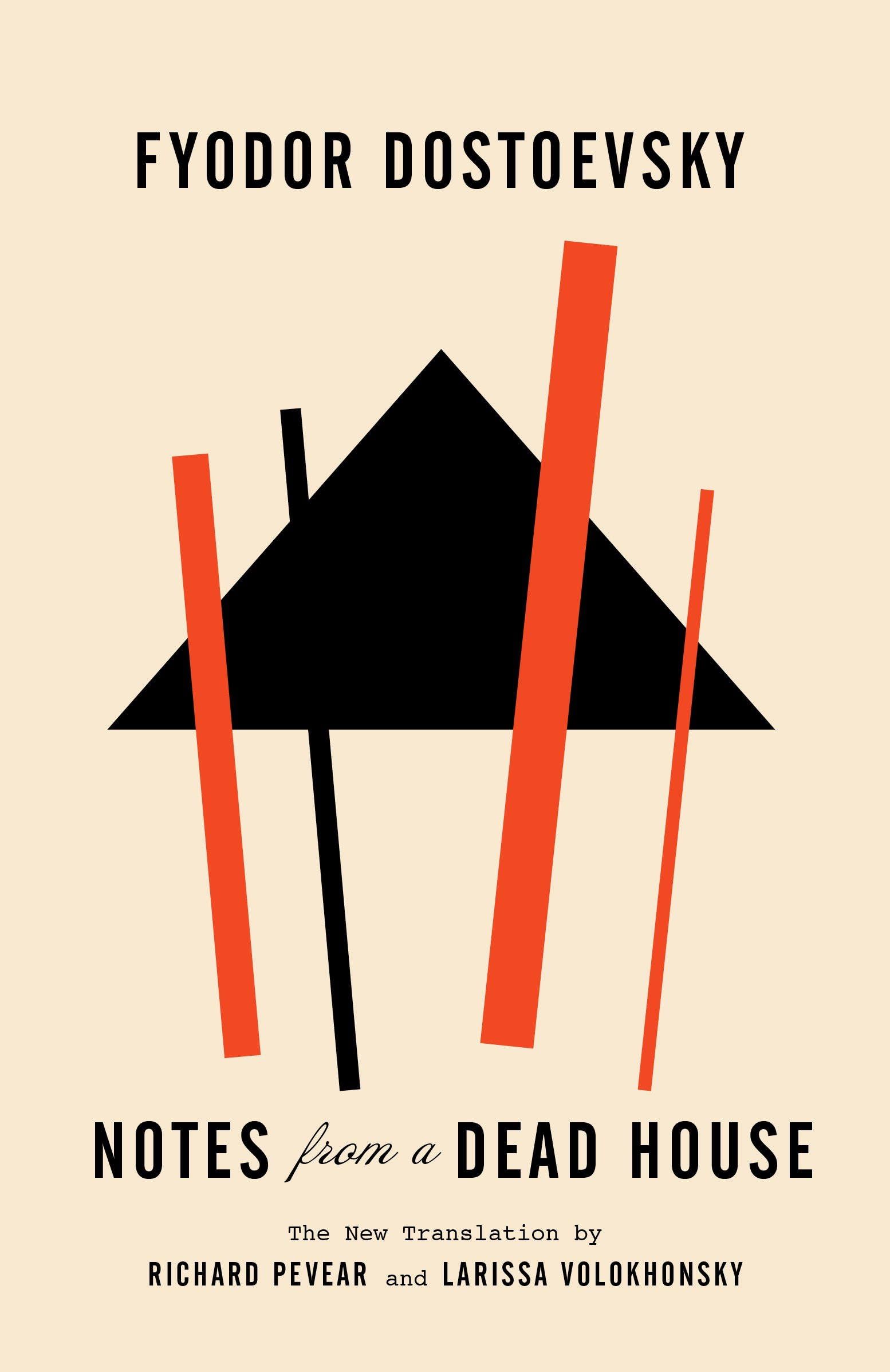
Good quality book .paper is white. Cover could be more attractive
K**V
OVER PRICED
The book is obviously great but the print price of these white vintage books are only Rs250! They charge 400+ for them, sometimes even 800! Returning this, not worth buying as this will only push the seller to increase the price even more.
R**V
Jail story
To be honest, I dreaded starting this book. Considering it's premise, I braced myself mentally to read and feel abject sorrow, helplessness, guilt and such like emotions while reading this book. Having read Crime and Punishment by the same author, I was anticipating a moving, if dark and brooding, work of literature. It turned out, I needn't have feared this book. Even if the author deals with jailed inmates and the environment inside a really poor jail in freezing Siberia, the narrative does not seek nor look for pity or soul-search in the reader. It is an almost matter-of-fact narrative, describing the various different kinds of inmates met by the author and the general living conditions of the jail. Ofcourse, there are moments that leave you feeling really sorry and sad for the "unfortunates", there are also instances where you can't help but giggle at the funny anecdotes and characters! All in all, I would call this a balanced book. There is no preaching, no judgements, no morals or lessons, that the author wishes to convey as such. Maybe, he wants to convey the message of fortitude and resiliency inherent in everyone, but that too is put across in a very natural way. Almost as if, he didn't mean to convey it and the message is an off-shoot of his story. The flow of this narrative is a little jerky, with the author introducing a thread, only to abandon it to take it up later. It is as if, the author is 'speaking' and not writing this book. Makes you feel like you are having a conversation where the author is telling you his memories over a hot cup of tea by the fireside, on a cold wintry night in Siberia! A jail comprises of many different types of people. Stripped of the external or societal factors, what remains is the character or temperament of the person -- his basic nature, his natural reactions and ways of dealing with circumstances. Incarceration is truly a unifying factor, uniting every criminal irrespective of caste, creed, genes, financial status or education. Even if the author here described the criminals under-going punishment, it is worth noting that he got to study human temperament and psychology while he was shut in. The jail can be called a 'human laboratory' here, as it allowed the author to observe different kinds of people, under the same roof, with external factors kept constant or uniform or rather, excluded completely. It is fortunate that the author is a master of acute and deep observation skills and he thought of putting his observation on paper for posterity. This book hence is also a marvellous study of human nature. Criminals are after all humans too. They feel, react, think and express as any ordinary person. A beautiful book. Reminds me of a beautiful Snowdrop flower, blooming inspite of the harsh snow around!
J**N
Still dostoyevski
Not his best work in my opinion, but its definitely still a must read.
P**F
He is the master and this new translation is the best ever you can get
Nobody can beat Dostoevsky when it comes to writing about man. He is the master and this new translation is the best ever you can get. The closest English translation of what the author wrote in Russian. Now I can claim to have all the works of Fyodor Dostoevsky.
A**E
A Vibrant New Translation of This Remarkable Memoir/Novel
My love for the writing of Fyodor Dostoevsky has been passed down to the next two generations. It is no accident that one of my grandson's bears the middle name of Fyodor! The author's memoir about prison life - thinly disguised as a novel, has undergone a stunning and beautiful new translation at the hands of the gifted husband and wife team of Richard Pevear and Larissa Volokhonsky. Dostoevsky was initially sentenced to die by firing squad for his involvement in a Utopian socialist discussion group. The CTsar commuted his sentence to four years in Siberia. This book, "Notes From A Dead House" represents Dosoevsky's memories of those years, smuggled out of the prison in bits and pieces. Most striking in this narrative is the transformation that the aristocratic protagonist undergoes as he begins to recognize the common humanity that he shares with many of the prisoners - even with the least likable among them. The language in this marvelous translation is rich and evocative. The characters we meet are memorable and idiosyncratic, in many cases giving hints at future fictional characters like Raskolnikov and members of the Karamazov family. For any fan of Dostoevsky's remarkable oeuvre, this book is a welcome addition to your library.
J**S
Amazing book
Love the book
M**O
A Tale Worth Reading
Dostoevsky is an iconic writer whose work is truly timeless. An engaging read, an interesting journey. Read the book and take the fascinating trip.
Trustpilot
2 months ago
2 months ago